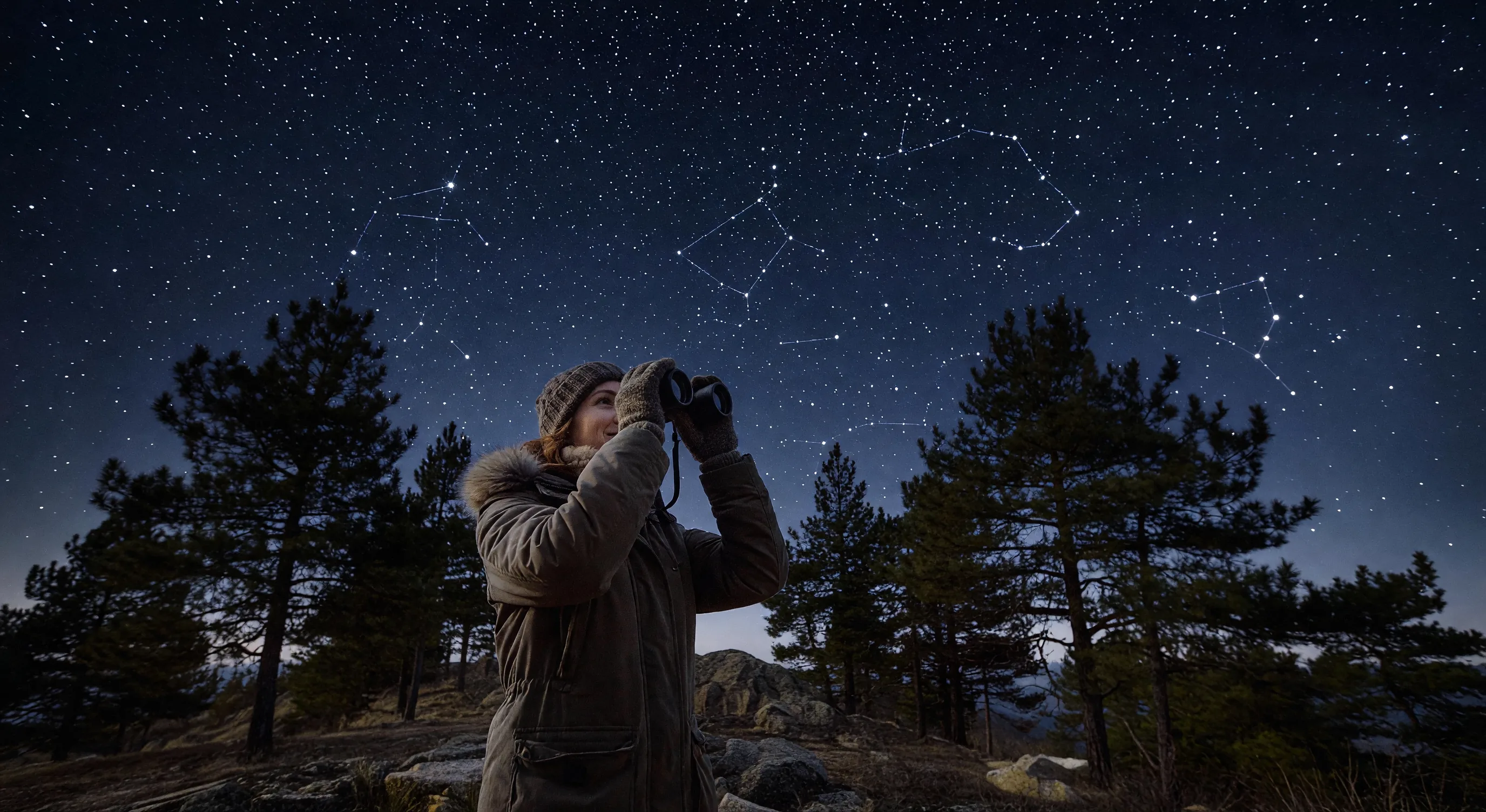
Everything you need to start observing the night sky tonight — no equipment required.
Stargazing is simply the practice of observing the night sky. It can be as simple as stepping outside, looking up, and noticing the patterns of stars, the Moon, or a passing satellite. Over time, it becomes a way of noticing the changing seasons, the movement of planets, and the beauty of our universe.
Two hours after sunset until two hours before sunrise offers the darkest skies. New Moon weeks are ideal for faint objects. Check a local sunset time and plan accordingly.
Even in cities you can see bright stars and planets. For more detail, travel 30–60 minutes from urban centers. Use light pollution maps such as lightpollutionmap.info.
Test what you've learned. Answers appear after you choose.
No. Many beautiful sights — the Moon, bright planets, the Milky Way, major constellations — are visible with the naked eye or inexpensive binoculars. A telescope is helpful later.
You can still enjoy the brightest stars and planets. Focus on the Moon and naked-eye objects. Many cities have nearby parks or hills with better views. Join local astronomy clubs for dark-sky trips.
You can learn the major ones visible in your season in a few evenings. Start with the Big Dipper or Orion. Practice regularly and they will become familiar friends.